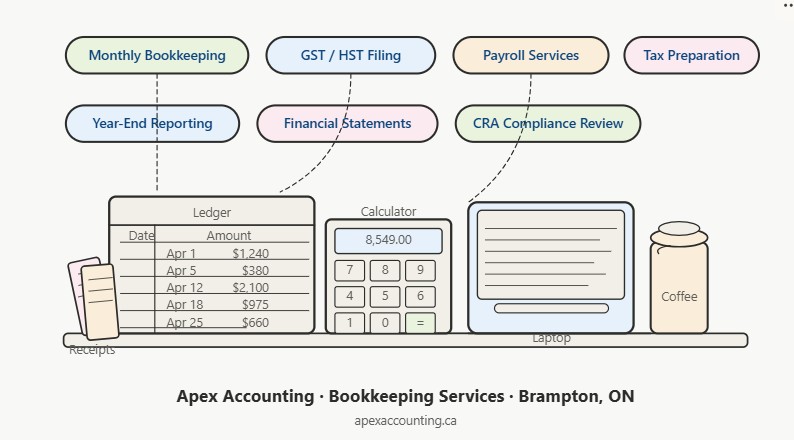
We talk to a lot of small business owners. Contractors, retailers, consultants, tradespeople — and over the past couple of years, one thing keeps coming up: the gap between how they’re managing their books and what’s actually possible right now has never been wider. Not because they’re doing anything wrong. Just because things have changed faster than most people realize.
This post is our honest take on where bookkeeping and accounting stand in 2026, what’s working for our clients, and a few things we think every business owner in Canada should know going into the second half of the year.
The software really has gotten that much better
We know “the software is better now” sounds like something someone has been saying for 20 years. But it’s genuinely true in a way it hasn’t been before. The automation built into platforms like QuickBooks and Xero has reached a point where routine transaction categorization, bank reconciliation, and even flagging potential errors happens without anyone touching it.
What that means practically: if you’re still doing your bookkeeping by downloading statements and manually entering things into a spreadsheet, you’re spending hours every month on work that software can handle in minutes. More importantly, you’re probably behind — which means your financial picture is always slightly out of date when you need it most.
“The number one thing I wish I’d done sooner was connect my bank feeds and stop touching the data manually. It felt like losing control. It was actually the opposite.” — a client who came to us two years ago mid-chaos
Cloud-based accounting also means your accountant can see what’s happening in your books without waiting for you to export and email a file. For clients who work with us, that’s a real difference — we can catch things earlier, answer questions faster, and spend our calls talking about strategy instead of reconciling last quarter.
What the CRA actually expects from you
This one is worth going over clearly because there’s a lot of vague advice out there. Under the Income Tax Act, every business operating in Canada is legally required to maintain adequate records. Not “try to keep decent records” — required. Here’s what that looks like in practice.
The CRA requires you to hold onto your records for a minimum of six years from the end of the tax year they relate to. That’s not six years from when you filed. So if your 2023 fiscal year ended December 31st, those records need to be accessible until at least the end of 2029. That includes invoices, receipts, payroll records, bank statements, and any other documentation that supports what’s on your return.
Your records need to be in English or French, complete, and available if the CRA asks for them. Electronic records are fine — but they need to be properly backed up and retrievable. A folder of blurry phone photos that you can’t find is not going to hold up in a review.
GST/HST reminder
If your business revenues hit $30,000 in any rolling 12-month period, you’re required to register for GST/HST — not at year end, but when you cross that threshold. This catches a lot of sole proprietors off guard. Once registered, you’re collecting tax on behalf of the government and need to remit on schedule. Late filings are one of the most common audit triggers we see.
The things that tend to attract CRA attention: income that doesn’t match what the bank shows, large deductions without documentation, expenses that look personal, GST/HST filing gaps, and expense ratios that seem off for the type of business. Clean, consistent records don’t guarantee you’ll never get reviewed — but they make any review much less stressful and much faster to resolve.
Bookkeeping once a year is not a strategy
Every tax season we work with clients who haven’t looked at their books since the previous March. It happens. Running a business is consuming, and bookkeeping rarely feels urgent until it is. But catching up months of transactions in a rush creates real problems — not just stress, but actual errors. Miscategorized expenses. Missing deductions. Cash flow surprises that weren’t surprises at all, just unnoticed.
A monthly bookkeeping routine — even a light one — keeps you from losing the thread. More importantly, it gives you a financial picture that’s actually useful. Knowing where your money went last month matters when you’re deciding whether to hire someone, take on a new contract, or make a purchase. Guessing doesn’t serve you well.
For a lot of our clients, the shift to working with a dedicated bookkeeper has been less about compliance and more about having someone who keeps things current so they don’t have to think about it. That’s a legitimate business decision. Your time has value, and it probably isn’t best spent on bank reconciliation.
Your accountant should be doing more than tax returns
This is something we talk about a lot internally. The accounting profession is shifting — not because the compliance work is going away, but because software handles more of the mechanical side than it used to, which frees up time for the stuff that actually moves the needle for a business.
We’re spending more time with clients on questions like: where are your margins tightest and why? What does your cash flow look like over the next 90 days? If you’re thinking about incorporating, what does that actually mean for your tax position? Those conversations used to happen once a year if at all. They should be happening regularly.
If your current accountant relationship is purely transactional — you hand over documents, they file a return, you don’t talk until next year — it might be worth asking whether you’re getting what you could out of that relationship.
A note on fraud, because it’s more common than people think
We don’t want to be alarmist about this, but we’d be leaving something important out if we didn’t mention it. Business email compromise, invoice fraud, and phishing attacks targeting small businesses have been climbing. The scenarios are often the same: someone receives an email that looks like it’s from a supplier or a colleague asking them to update payment details or approve an urgent transfer. People fall for it because the emails are convincing.
The best defense is procedural, not technical. Verify payment changes over the phone before acting on email requests. Don’t share accounting software logins. Review your bank and credit card statements regularly — not just the totals, but the actual transactions. Catching something early is much better than discovering it six months later.
If any of this is prompting questions about your own situation — your records, your GST registration, whether your current setup is actually working — we’re happy to talk. That’s what we’re here for.
Apex Accounting works with small and mid-size businesses across Toronto, Brampton and the GTA. If you want a second set of eyes on your books, or just a straight answer on a compliance question, reach out.
Get in touch info@apexaccounting.ca 647 979 7728